
From Lebanon to the Strait of Hormuz, a Middle East hanging on fragile peace talks
From Lebanon to the Strait of Hormuz: Middle East’s Fragile Peace Hangs by a Thread
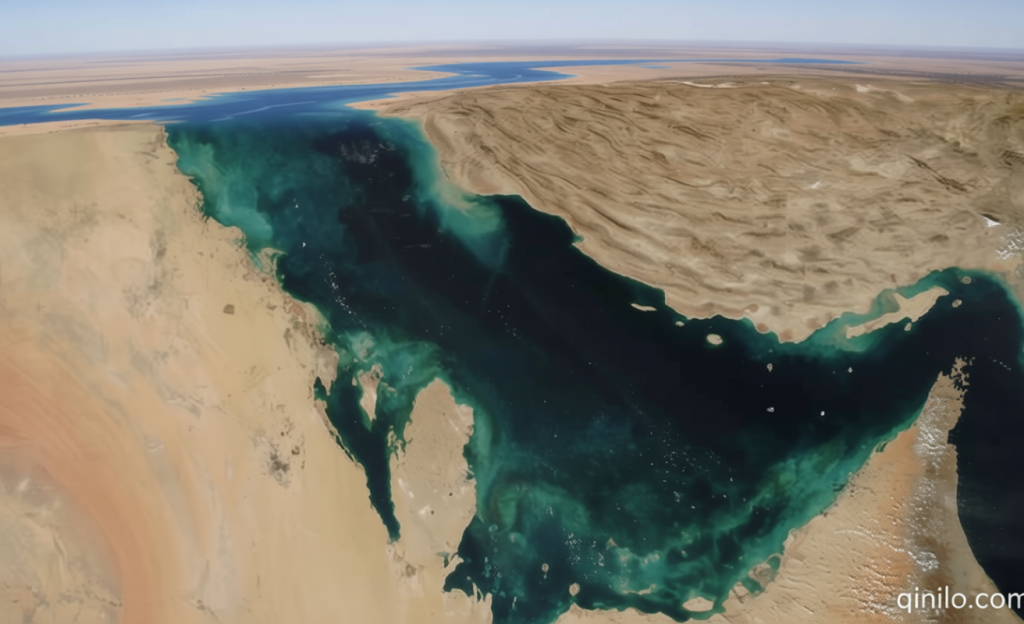
Qinilo.com – The Middle East remains in a delicate balance, with peace talks between Washington and Tehran hanging in the air as tensions escalate from Lebanon to the Strait of Hormuz. Despite recent calm in southern Lebanon, where UN peacekeepers have observed no new airstrikes or missile launches since Tuesday, the fragile ceasefire is still under threat. Israeli military drones continue to patrol the region, while ground operations persist, underscoring the precarious nature of the ceasefire. The Strait of Hormuz, a vital chokepoint for global oil trade, also faces uncertainty as geopolitical conflicts ripple across the region, threatening to disrupt critical supply lines.
Interconnected Crises and the Path to Ceasefire
The crisis in Lebanon, Gaza, and the Strait of Hormuz is now intertwined, with each conflict impacting the others. The Memorandum of Understanding signed last week between the U.S. and Iran aimed to stabilize the region by ending hostilities and restoring safe passage through the Strait of Hormuz. However, the recent attack on a vessel in the Gulf of Oman has reignited fears of renewed hostilities, casting doubt on the progress of peace talks. Lebanon’s ceasefire, effective June 19, has been a temporary reprieve, but ongoing Israeli air incursions and military maneuvers within the UNIFIL zone suggest that stability is far from guaranteed.
Meanwhile, the humanitarian situation in Gaza has deteriorated, with essential supplies becoming increasingly scarce. The Kerem Shalom crossing remains the sole operational gateway, but its limited capacity and frequent disruptions have left thousands in dire need. UN teams report that daily deliveries of food, medical equipment, and hygiene products are still being made, though the rate of distribution has slowed. The crisis has deepened as fuel shortages cripple electricity generation, and medical facilities struggle to provide care for patients suffering from acute respiratory infections and other preventable illnesses.
Stranded Seafarers and the Strait of Hormuz
The Strait of Hormuz, a critical maritime artery for global oil exports, has become a battleground for stranded seafarers. Over 11,000 crew members are still unable to return to their home countries after the February conflict between the U.S., Israel, and Iran disrupted shipping routes. The International Maritime Organization (IMO) temporarily halted its evacuation efforts following the latest attack on a vessel in the Gulf of Oman, a move that has raised concerns about the safety of maritime workers. The Day of the Seafarer, observed on Thursday, serves as a reminder of the human cost of these geopolitical tensions.
While several vessels have been rescued, the incident has prompted a safety review by the IMO, which emphasizes the need for coordinated efforts to protect trade and laborers. The Strait of Hormuz remains a focal point of global attention, as its security directly affects energy markets and international supply chains. Analysts warn that the continued instability could lead to prolonged disruptions, with far-reaching consequences for economies dependent on Middle Eastern oil. The UN and regional actors are urging a swift resolution to prevent the situation from spiraling further.
Regional Tensions and the Role of Peace Talks
The fragile peace talks between the U.S. and Iran are being watched closely as a potential lifeline for the region. The negotiations, held in Switzerland, concluded on Monday with vague agreements that have left many questioning their effectiveness. While the Memorandum of Understanding was hailed as a breakthrough, conflicting statements from both sides have introduced new uncertainties. The U.S. has expressed optimism about progress, while Iran has called for more concrete commitments to address the root causes of the conflict.
UN observers in Lebanon report that the ceasefire is being upheld by both parties, though violations of Lebanese airspace by Israeli drones continue. These incursions, though limited in scope, have caused concern among local residents and aid workers. The peace talks also aim to resolve the humanitarian crisis in Gaza, where the lack of access to resources has exacerbated the suffering of civilians. With the Strait of Hormuz remaining a flashpoint, the success of these negotiations could determine whether the Middle East avoids further escalation or slides deeper into chaos.
“The ceasefire in Lebanon is a necessary step, but it must be accompanied by tangible progress in peace talks to ensure lasting stability,” stated UN spokesperson Stéphane Dujarric.
Long-Term Impacts of the Conflict
The prolonged conflict has taken a heavy toll on the region’s infrastructure and economy. In Lebanon, the destruction of key transportation routes has hampered the movement of goods and people, while the strain on UNIFIL’s resources has been significant. The Gulf of Oman, a critical stretch near the Strait of Hormuz, has become a hotbed of activity, with attacks on commercial vessels raising alarms about the safety of maritime trade. The International Maritime Organization (IMO) is now prioritizing the protection of supply lines, recognizing their importance to global energy security.
As the Middle East continues to grapple with these crises, the need for sustained diplomatic efforts has never been greater. The link between Lebanon, Gaza, and the Strait of Hormuz highlights how interconnected the region’s challenges are, with each conflict influencing the others. While the focus remains on the immediate ceasefire and evacuation of seafarers, the long-term prospects for peace depend on resolving deeper issues of trust and cooperation between the conflicting nations. The upcoming months will be crucial in determining whether the region can stabilize or face further instability.