
World Cup football’s other goal: Helping young people talk about mental health
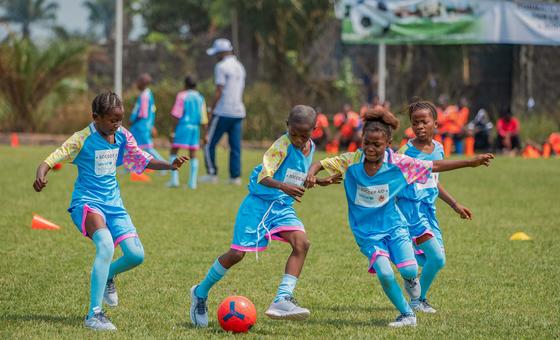
World Cup Football’s Hidden Impact: Fostering Youth Mental Health Dialogue
Qinilo.com – Dr. Sahira Al Nahari, founder of Shifā Art—a Saudi-based initiative that leverages creative expression to explore mental health—observed a common challenge among male participants in her therapeutic workshops. While many hesitated to share personal emotions, they often began by drawing football jerseys or their favorite teams, according to the psychologist.
These visual exercises served as a gateway to deeper conversations, enabling attendees to discuss daily stressors and emotional struggles. The practice demonstrated how sports can act as a bridge to topics typically avoided in traditional mental health discussions.
“On the field, no one succeeds alone,” Dr. Al Nahari remarked. “Players rely on a network of defenders, midfielders, coaches, and fans—all playing critical roles. Youth mental health requires the same collaborative framework.”
At the UN Headquarters on Tuesday, Dr. Al Nahari joined UN Assistant Secretary-General for Youth Affairs Felipe Paullier to discuss how sports can enhance mental health outcomes for young people and reduce societal stigma.
On Friday, just two days before the Men’s World Cup final in New Jersey, the UN Youth Office will host a gathering featuring young leaders, policymakers, and athletes. The event, titled “One World, One Game, One Goal,” aims to spotlight football as a tool for combating youth social isolation.
Global Youth Mental Health Trends
A UN report from February highlighted alarming statistics: one in seven individuals aged 10 to 19 face mental health challenges. By their mid-twenties, 75% of adult mental health conditions have already emerged, with depression rates among adolescents and young adults rising in recent years.
The findings emphasized that mental health outcomes in youth are shaped by inequalities and social factors, including education, employment, family dynamics, poverty, and cultural attitudes. Cross-sector collaboration is essential to address these interconnected issues.
“Youth today are navigating a complex, rapidly changing world marked by digital transformation, economic instability, conflict, displacement, and social disconnection,” said Mr. Paullier.
To tackle these challenges, the World Health Organization (WHO) advocates for interventions that strengthen resilience, offer alternatives to harmful behaviors, and foster inclusive social environments. The report also noted that team sports are correlated with lower depression and anxiety rates globally, though many young people struggle to access regular participation.
Football, as the world’s most popular sport, is positioned by the UN Youth Office to cultivate a sense of community, emotional resilience, and collective well-being. “Football and sports serve as a potent message,” Mr. Paullier explained. “They connect people across barriers, and iconic athletes can reshape narratives to inspire change.”
Both speakers underscored football’s universal appeal. Dr. Al Nahari highlighted that young people are already developing peer-driven solutions for mental health support, urging the UN and global partners to listen and collaborate.
“The true champions are the youth themselves,” she stated. “They aren’t waiting to be rescued—they’re actively shaping their own paths.”
The “One World, One Game, One Goal” gathering exemplifies the UN’s broader strategy to integrate sports into mental health programs worldwide. Initiatives like the Helping Adolescents Thrive (HAT) project, led by WHO and UNICEF, provide governments with frameworks to implement psychosocial support in schools.
Mr. Paullier added, “We want to meet young people where they are—not just through sports, but through the tools they use daily.”
Despite these efforts, Mr. Paullier pointed out that global funding for mental health remains inadequate. Most nations dedicate less than 2% of annual health budgets to this cause, creating a $200 billion funding shortfall, as reported by the WHO.