
World News in Brief: Aid convoy attacked in South Sudan, Ebola threatens livelihoods, UN deplores death penalty
Qinilo.com –
World News in Brief: Key Global Developments
In this edition of World News in Brief, three critical global events have sparked international attention. First, an aid convoy was ambushed in South Sudan, resulting in casualties and raising concerns about humanitarian safety. Second, the Ebola outbreak in the Democratic Republic of the Congo (DRC) threatens to disrupt millions of livelihoods. Finally, the United Nations has intensified its criticism of the death penalty, emphasizing its incompatibility with human rights principles.
Aid Convoy Attack in South Sudan
On Monday, an ambush in Jonglei State, South Sudan, targeted an aid convoy en route between Payuel Payam and Pajut in Duk County. The attack, which killed five individuals including humanitarian workers, occurred as the John Dau Foundation transported staff from an Action Against Hunger training session. Four others were injured, with reports indicating civilians also lost their lives or sustained harm. The United Nations has condemned the incident, highlighting its impact on ongoing aid efforts in a region already struggling with conflict and displacement.
“Humanitarian workers dedicate their lives to saving others and reaching people in desperate need. They must never be a target,”
UN Humanitarian Coordinator Ramanathan Balakrishnan called for an impartial investigation to hold perpetrators accountable. The attack brings the annual count of humanitarian casualties in South Sudan to 29, underscoring the persistent risks faced by aid personnel. UN Spokesperson Stéphane Dujarric described the assault as “unacceptable,” stressing the need for swift action to protect aid operations and ensure the safety of civilians.
Ebola Outbreak Intensifies Economic Threats
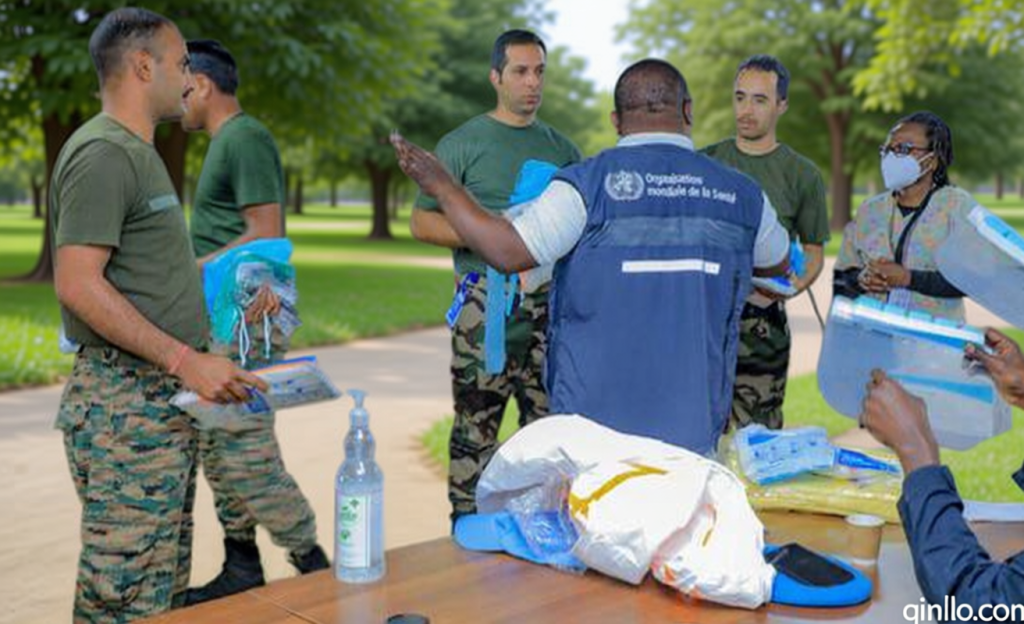
The escalating Ebola crisis in the Democratic Republic of the Congo (DRC) has prompted warnings about its economic fallout. The UN Development Programme (UNDP) reported that the outbreak could jeopardize over a million livelihoods, with projections of 300,000 employment threats and $3.6 billion in regional economic losses if the epidemic spreads further. This comes as the Bundibugyo strain continues to infect more than 1,400 people, including 350 fatalities, across DRC and Uganda.
“We are seeing the impact in real time: jobs are disappearing, markets are slowing down, and families are being pushed to the edge,”
UNDP Resident Representative Damien Mama highlighted the disproportionate burden on women and vulnerable communities, who face heightened economic and health challenges. The outbreak has disrupted cross-border trade in Ituri Province, a key region for economic activity, while also forcing difficult decisions among families, such as relaxing quarantine measures to sustain incomes. The World News in Brief underscores the urgency of global collaboration to mitigate these cascading effects.
Global Advocacy Against Capital Punishment
UN Reaffirms Opposition to Death Penalty
At the World Congress Against the Death Penalty in Paris, UN High Commissioner for Human Rights Volker Türk reinforced the organization’s long-standing stance against capital punishment. He argued that the death penalty undermines human dignity, stating,
“The death penalty is incompatible with human dignity and rights, including not only the right to life, but also the right not to be subjected to cruel, inhuman or degrading treatment,”
and noted its ineffectiveness in deterring crime.
UN Secretary-General António Guterres joined the event via video, declaring the death penalty “an inhumane form of punishment” with no place in modern society. The triennial congress, organized by the French group Together Against the Death Penalty, brought together advocates from across the globe, emphasizing the shift toward more humane legal systems. Over 90% of nations have since abolished executions, according to Türk, yet the practice remains in force in several countries, particularly in regions with high poverty rates and limited judicial resources.
Broader Implications of the Death Penalty
Türk further pointed out that the death penalty is often applied in a “capricious and discriminatory” manner, disproportionately targeting marginalized groups. This aligns with the World News in Brief focus on systemic inequalities exacerbated by the global pandemic and conflict zones. The UN has urged governments to prioritize rehabilitation and life sentences over capital punishment, citing evidence of wrongful convictions and the irreversible nature of the death penalty.
While the death penalty remains a contentious issue, the World News in Brief highlights growing international consensus on its abolition. The recent events in South Sudan and the DRC serve as reminders of how critical global issues like war, disease, and legal practices intersect to shape human rights challenges. The UN’s continued advocacy reflects its commitment to addressing these concerns through unified global action.