
Middle East update: Airstrikes and evacuation orders in Lebanon, aid restrictions in Gaza
Middle East update: Airstrikes and evacuation orders in Lebanon, aid restrictions in Gaza
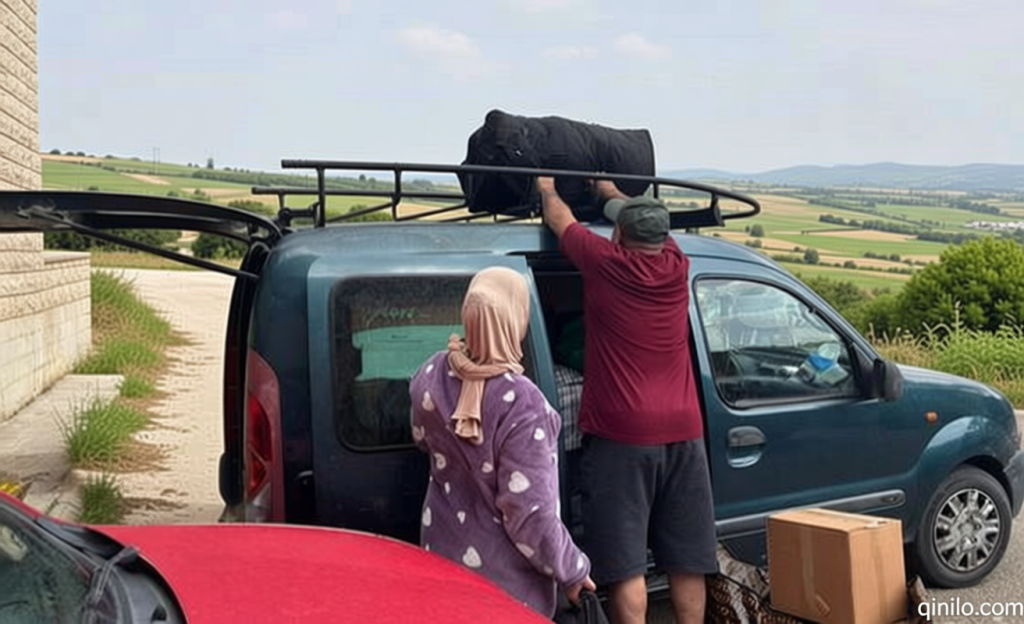
Qinilo.com – The United Nations announced on Tuesday that escalating Israeli aerial assaults in Lebanon have prompted widespread displacement, with families again forced to abandon their homes. In the capital, Beirut, residents spent the night in their vehicles, while shelters in the city received dozens of displaced families over the past 48 hours. The conflict, which intensified on 2 March between Israeli forces and Hezbollah militants, has left nearly one million people without stable housing nationwide.
UN Deputy Spokesperson Farhan Haq highlighted that the Israeli military issued an evacuation order for the city of Nabatieh, situated north of the Litani River, for the first time this week. This directive followed a series of strikes that forced residents to seek safety. Simultaneously, a second evacuation alert was issued for Mashgara, a town in the Bekaa region, as rescue operations continued after an airstrike on Monday night.
Haq also noted that the World Health Organization documented nine attacks targeting healthcare facilities in the four-day period from 21 to 24 May, resulting in eight casualties among medical personnel and 45 injuries. On 23 May alone, 25 healthcare workers were wounded at Hiram Hospital in the southern governorate after multiple airstrikes struck nearby areas. The same day, an Israeli strike obliterated the Civil Defense Center in Nabatieh, destroying essential firefighting gear, rescue equipment, and heavy machinery. This setback further strained the already overwhelmed emergency response systems in the region.
Two additional hospitals, located in the South and Nabatieh governorates, suffered damage from nearby strikes in recent days. Haq reiterated that assaults on health workers and facilities are unacceptable, urging all conflict parties to cease such attacks and prioritize the protection of medical infrastructure. “We reiterate that attacks on health workers and health facilities are unacceptable. All parties to conflicts must immediately stop them and ensure protection for healthcare,” he stated.
UNIFIL’s Operational Challenges and Humanitarian Support
Haq provided an update on the United Nations Interim Force in Lebanon (UNIFIL), detailing its observations of heightened military activity. Since last Friday, the peacekeeping force has documented extensive Israeli operations, as well as attacks by non-State armed groups, believed to be Hezbollah, on Israeli forces within its area of responsibility. Despite the ceasefire that took effect on 17 April, the situation remains volatile.
On Monday, peacekeepers recorded 91 instances of airspace breaches, the highest figure since the conflict paused. They also noted 399 firing incidents linked to Israeli forces and 11 trajectories of projectiles attributed to Hezbollah. UNIFIL has coordinated multiple humanitarian missions to deliver aid, supporting efforts by the UN and other organizations to address immediate needs in affected regions.
Gaza’s Aid Restrictions and Public Health Concerns
Turning to the Occupied Palestinian Territory, Haq emphasized that UN humanitarians report ongoing limitations in the movement of supplies into Gaza. Over the weekend, Israeli authorities confirmed that the Zikim Crossing would remain closed for the week, leaving Kerem Shalom/Karem Abu Salem as the sole operational entry point for cargo. “We continue to call for more crossings to open and for more critical supplies, such as back-up generators and fuel, to be let in regularly, predictably, and in sufficient volumes,” he said.
Humanitarian operations in Gaza are focused on mitigating public health risks and enhancing sanitation efforts. Earlier this month, the UN and its partners delivered three tonnes of rodenticides and 3,000 litres of pesticides to combat infestations across the enclave. These efforts included spraying activities in 1,700 locations to control pests and raise awareness among the population. However, critical shortages of engine oil persist, disrupting vital operations in water and sanitation sectors.
Haq explained that aid partners estimate approximately 7,000 litres of engine oil are required monthly to maintain functioning systems. Without this supply, life-saving activities are being curtailed. For example, the Sheikh Radwan stormwater lagoon in Gaza City was forced to halt operations on 11 May to extend the generator’s lifespan. Since then, water and wastewater levels have surged, increasing the likelihood of flooding in the coming weeks and amplifying public health threats.
Meanwhile, humanitarian agencies have distributed essential items to over 14,000 households in Gaza. Haq also mentioned that these efforts extend to the West Bank, where aid organizations are addressing the needs of communities impacted by conflict-related damage, rising settler violence, and the risk of forced displacement. “Our partners are also responding in the West Bank, mainly to Palestinian communities affected by conflict-related damage, escalating settler violence, the increasing risk of forcible displacement of entire communities and deteriorating shelter conditions,” he added.
UN humanitarians stress that the prolonged restrictions on aid access have created a critical backlog of supplies. While the Zikim Crossing remains closed, the reliance on Kerem Shalom has placed additional pressure on the already strained logistics network. The situation has led to delays in the delivery of essential goods, including food, medicine, and construction materials, which are vital for rebuilding infrastructure and supporting daily life.
Haq underscored the importance of maintaining uninterrupted aid flows, particularly during periods of escalation. The UN has called for urgent action to open more crossings and ensure the regular supply of critical resources. Without these measures, the impact on civilians in both Lebanon and Gaza will continue to worsen, exacerbating displacement and health crises.
Regional Impact and Call for Immediate Action
The recent airstrikes have not only displaced communities but also disrupted key infrastructure, including healthcare and emergency services. In Lebanon, the evacuation orders reflect the growing fear among residents as attacks intensify. In Gaza, the destruction of the Civil Defense Center highlights the vulnerability of local resources to military operations.
Haq’s statements underscore the need for a coordinated response to stabilize the region. While UNIFIL monitors military activity, the UN and its partners work tirelessly to deliver aid and support recovery efforts. The situation in Gaza, however, remains particularly dire due to the limited entry points and ongoing shortages. The combined effect of these challenges has created a precarious environment for civilians, with public health risks and displacement levels climbing.
As the conflict continues, the United Nations remains committed to advocating for the protection of civilians and ensuring access to essential supplies. The organization’s efforts in Lebanon and Gaza demonstrate its dedication to addressing both immediate and long-term needs. However, the success of these initiatives hinges on the cooperation of all parties involved and the timely restoration of aid corridors.
With the ceasefire in place, there is hope for a more stable environment, but the reality on the ground remains challenging. The persistent attacks on healthcare facilities, the evacuation orders, and the aid restrictions illustrate the complex and multifaceted nature of the crisis. The UN’s call for urgent action serves as a reminder that the situation requires sustained attention and a unified approach to mitigate further harm to civilians.