
Building trust on patrol: One police officer’s peacekeeping journey in South Sudan
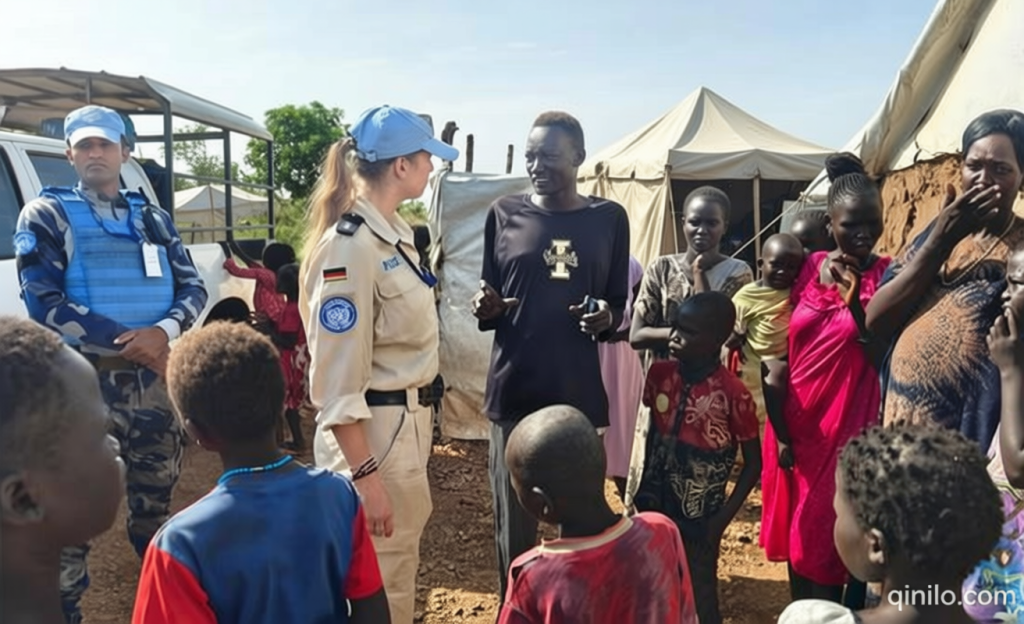
Building Trust on Patrol: A Peacekeeper’s Journey in South Sudan
Qinilo.com – Building trust on patrol is a cornerstone of peacekeeping, as exemplified by Stephanie Königs, a German police officer, who shared her experiences with UN News during her time with the United Nations Mission in South Sudan (UNMISS). Her journey from a civilian life in Germany to a frontline role in one of the world’s most conflict-ridden nations highlights how trust-building through consistent, empathetic engagement can transform peacekeeping efforts.
The Mission’s Purpose and Global Reach
UNMISS was established in 2011 to protect civilians, facilitate humanitarian aid, monitor human rights, and support the implementation of peace agreements in South Sudan, the world’s youngest nation. Its operations span a vast region, requiring personnel from over 70 countries to collaborate on diverse challenges, from ensuring security to fostering dialogue between communities. This international presence not only reflects the mission’s global importance but also underscores the shared responsibility of maintaining peace in fragile environments.
Peacekeeping missions like UNMISS often face the dual task of preventing violence and rebuilding social cohesion. Trust-building on patrol is essential, as it allows officers to establish rapport with local populations, making them more receptive to peace initiatives. Königs emphasized that trust is not just a goal but a process, requiring patience, consistency, and a genuine commitment to understanding the people they serve.
A Year and a Half of Impact and Reflection
Königs spent 18 months with UNMISS, a period she described as both challenging and transformative. Her role as a police officer involved more than enforcing order—it required her to navigate cultural nuances, listen to community concerns, and create a sense of safety during daily patrols. After returning to Germany, she reflected on the qualities that enabled her to make a difference, including adaptability and a willingness to engage with people from all walks of life.
“The core of my decision to become a police officer is the desire to assist people, especially those in need. My parents also served in law enforcement, so I suppose it’s in the family DNA. As a child, growing up around their dedication shaped my perspective, and I wanted to carry that forward.”
Patrols in South Sudan are often unpredictable, with encounters ranging from brief greetings to life-threatening situations. Königs noted that trust-building on patrol is most effective when officers approach these moments with openness, showing respect for local customs and a keen interest in the lives of those they interact with. These small gestures, she said, can turn strangers into allies.
“It’s the small, unseen actions that create the most meaningful change. I remember engaging with young women who were initially hesitant to speak with us. Over time, they opened up, shared their stories, and trusted us enough to be honest.”
Her experiences underscored the importance of consistency in trust-building. Whether negotiating with community leaders or comforting a family in distress, every interaction reinforced the mission’s goal of fostering hope and stability. Königs also highlighted the role of cultural sensitivity, stressing that understanding local contexts is key to effective peacekeeping. These efforts, she said, help bridge gaps between the UN and the people they aim to protect.
Königs’ work has been recognized with the Woman Police Officer of the Year Award, a testament to her dedication and the growing importance of gender diversity in peacekeeping roles. While female officers are present in the field, she noted that their influence in operational decision-making remains limited. “Having more women at the table would strengthen our collective understanding and effectiveness,” she remarked, advocating for increased representation to ensure inclusive strategies.
Empathy as a Foundation for Peace
Empathy is the driving force behind trust-building on patrol, according to Königs. She explained that peacekeepers must approach their work with humility, recognizing that their role is not to dictate solutions but to support them. This mindset allows officers to connect with communities on a personal level, creating a bridge between the mission’s objectives and the needs of the people.
South Sudan’s complex social dynamics require peacekeepers to be both observant and responsive. Königs shared how her presence during patrols helped dispel fears in communities that had long been divided by conflict. “You have to be genuinely invested in their narratives and the community’s viewpoint,” she said. “Without that, you can’t build trust, and trust is what allows people to share their concerns.”
Her journey also revealed the power of small, consistent efforts in peacekeeping. By showing up regularly, listening actively, and treating every interaction with care, officers like Königs contribute to long-term stability. This approach is particularly vital in regions where trust in institutions has been eroded, as it helps rekindle faith in the mission’s purpose and the people working to achieve it.