
Moon Day focuses growing concerns around space junk
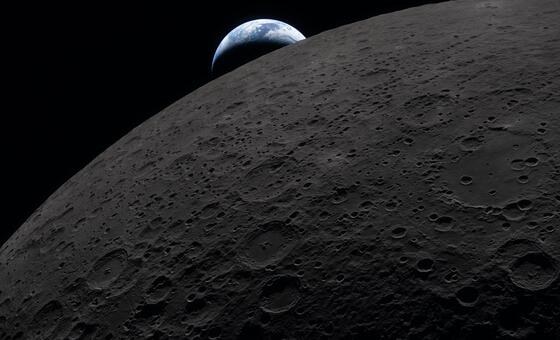
Moon Day Highlights Rising Concerns Over Space Debris
Qinilo.com – The United Nations has emphasized the environmental risks tied to space exploration as global interest in lunar missions intensifies. With humanity poised to reestablish a presence on the Moon, the organization is calling on nations to prioritize sustainability in their efforts, ensuring these endeavors do not jeopardize Earth or the long-term health of the space environment.
Environmental Impact of Lunar Activities
Over the past several decades, the rapid growth of space activities has demonstrated that each mission leaves a measurable ecological footprint. The consequences of these actions may take years to fully comprehend, underscoring the urgency of integrating sustainability into the design of space programs from the outset.
“The expansion of space activity has shown that every launch contributes to environmental changes, and understanding their full impact requires time. This is why it’s essential to prioritize sustainable practices early,” stated Jason Jabbour, a Senior Officer at the UN Environment Programme (UNEP).
UN Agreements and Space Preservation
Existing international frameworks encourage responsible space exploration and debris minimization. However, the current accumulation of orbital debris poses new challenges. An estimated 140 million fragments larger than one millimetre now orbit Earth, many undetectable yet capable of disrupting satellites and spacecraft.
Debris Beyond Orbital Threats
The issue extends beyond collisions. Decommissioned satellites, upon re-entering Earth’s atmosphere, release metals such as aluminium, lithium, and copper. Researchers are investigating whether these materials might alter atmospheric chemistry, influence cloud formation, or threaten the ozone layer.
Detachable rocket parts further exacerbate the problem. Some linger in orbit for years before disintegrating, while others break into thousands of pieces. Scientists estimate hundreds of tonnes of spacecraft and rocket components return to Earth annually, a trend expected to accelerate with the proliferation of satellite networks.
Microscopic Hazards and Brighter Skies
Even smaller mission-related items—bolts, lens caps, and protective covers—add to orbital congestion. Repeated collisions and explosions generate microscopic particles, which some studies suggest are gradually brightening the night sky.
While most spacecraft disintegrate during re-entry, larger components like heat shields may survive, presenting risks to people, infrastructure, and marine ecosystems.
Historical and Scientific Significance of the Moon
For millennia, the Moon has captivated human imagination, influencing myths, scientific inquiry, and navigation. Its gravitational pull shapes Earth’s tides, enriching coastal waters with oxygen and nutrients, and sustaining diverse marine life, including the Great Barrier Reef. Studying the Moon also provides insights into the formation and development of the solar system.
Global Lunar Missions and UN Advocacy
Recent years have seen a surge in lunar initiatives. NASA’s Artemis II mission earlier this year orbited the Moon with four astronauts, a step toward establishing a permanent human presence by the 2030s. Concurrently, China, India, Japan, and private firms are advancing their own ambitious programs.
As space activity grows, so does the focus on its ecological consequences. The UN’s Moon Day initiative on 20 July underscores the importance of safeguarding both space and Earth, positioning sustainability as a cornerstone of future exploration.
Collaborative Strategies for Space Sustainability
UN Member States have adopted guidelines to curb debris generation, emphasizing waste reduction, explosion prevention, and safe removal of retired satellites. The 1972 UN Liability Convention holds launching nations accountable for damages caused by their space objects, including joint missions.
To tackle these challenges, UNEP and the UN Office for Outer Space Affairs are collaborating to enhance understanding of space activity’s environmental effects. Their work aims to embed ecological protection into the governance structures of tomorrow’s space ventures.