
Security Council LIVE: Ambassadors debate future of Gaza amid stalled progress on lasting peace
Security Council LIVE: Ambassadors Debate Gaza’s Future Amid Stalled Peace Efforts
Qinilo.com – The United Nations Security Council is currently grappling with the slow momentum in Gaza, where the fragile truce continues to waver despite ongoing tensions. With the conflict in the region showing no signs of abating, delegates are focusing on the governance structure that will shape Gaza’s future, as well as the broader implications for peace in the Middle East. The discussions have taken a critical turn following recent escalations, highlighting the urgency of addressing both security and humanitarian concerns.
Fragmented Ceasefire and Escalating Tensions
The fragile ceasefire in Gaza, which has held for several months, is now under pressure as violence flares up in sporadic outbreaks. Ambassadors from member states have raised alarm over the lack of a clear timeline for the truce, with some accusing the parties involved of exploiting the pause to regroup. Reports indicate that the situation remains volatile, with frequent clashes between Palestinian militants and Israeli forces, leaving civilians caught in the crossfire. The Security Council is expected to scrutinize these incidents, emphasizing the need for a more sustainable resolution to the conflict.
A key point of contention is the status of the Gaza Strip’s administration. Delegates are divided on whether Hamas or a new political entity should hold authority, with some advocating for a transition to a civilian-led government. Others argue that Hamas’s leadership must remain intact to ensure stability. The debate has intensified as the absence of disarmament efforts raises questions about the feasibility of long-term peace. “Without a credible path to disarming Hamas, the situation will remain precarious,” stated one ambassador during a recent session, underscoring the council’s concerns.
“The Security Council’s focus must shift from maintaining the ceasefire to establishing a framework for lasting peace,” said a delegate from a European nation. “This requires decisive action, not just temporary pauses.”
As the council deliberates, the humanitarian crisis in Gaza has worsened, with millions facing severe shortages of food, water, and medical supplies. Aid organizations report that access to critical resources is increasingly restricted, forcing families to rely on dwindling reserves. The United Nations has called for emergency relief measures, but progress has been slow due to disagreements over the distribution of aid and the security arrangements required to protect it. “We cannot ignore the suffering of the people,” another representative noted, adding that the council must prioritize human needs over political agendas.
West Bank Conditions Deteriorate Amid Continued Conflict
While the focus remains on Gaza, the Security Council has also turned its attention to the West Bank, where conditions are deteriorating rapidly. Palestinian civilians continue to face targeted attacks, with recent incidents in Jenin and Hebron drawing widespread condemnation. The conflict has displaced thousands, disrupting daily life and placing additional strain on already overburdened communities. The council is debating whether the international community should take a stronger stance in supporting peace efforts in the West Bank, including measures to protect civilians and restore economic stability.
Analysts suggest that the stalled progress on a lasting peace agreement is partly due to the lack of consensus among key stakeholders. The United States, which has historically supported Israel, is seen as a critical player in the negotiations, but its recent statements have sparked debate. Some members of the council argue that the U.S. must exert more pressure to secure a comprehensive deal, while others caution against overcommitting to a political solution without addressing security concerns first. “The U.S. has the leverage to drive progress, but its commitment to a balanced approach is in question,” remarked a delegate from an African nation.
The role of the Palestinian Authority in the peace process has also come under scrutiny. While it is seen as the primary representative of Palestinian interests, its ability to negotiate effectively has been challenged by internal divisions and external pressures. Delegates from Arab states have called for a unified Palestinian stance, stressing that reconciliation between factions is essential for progress. Meanwhile, regional powers are pushing for a broader agreement that includes Israel, the Palestinians, and other actors in the region, such as Jordan and Egypt.
“A lasting peace cannot be achieved without addressing the root causes of the conflict,” asserted a Middle Eastern ambassador. “This means reconciling the political and security dimensions simultaneously.”
Amid these discussions, the council is also evaluating the effectiveness of current recovery initiatives. Several nations have pledged financial and logistical support to rebuild infrastructure damaged during the war, but implementation has lagged. Delays in the approval of funding and the slow deployment of resources have left many communities without adequate assistance. The challenge lies in coordinating efforts between international donors and local authorities, a process complicated by bureaucratic hurdles and security constraints.
As the debate unfolds, the Security Council is under increasing pressure to demonstrate tangible results. With the global audience watching closely, member states are expected to propose actionable measures that address both immediate crises and long-term stability. The outcome of these discussions could determine whether the council becomes a catalyst for peace or remains a platform for diplomatic gridlock. “We need to move beyond rhetoric and deliver on the promises made,” said a representative from a Latin American country, echoing sentiments shared by many.
Pathways to Peace or Prolonged Instability?
The question of how to structure governance in Gaza has become a central issue, with proposals ranging from a transitional administration to a fully civilian-led government. Some delegates argue that a power-sharing agreement between Hamas and the Palestinian Authority could provide a pathway to stability, while others insist that Hamas must be disarmed to pave the way for peace. The council is also considering the role of international actors, including the United Nations, in facilitating the process.
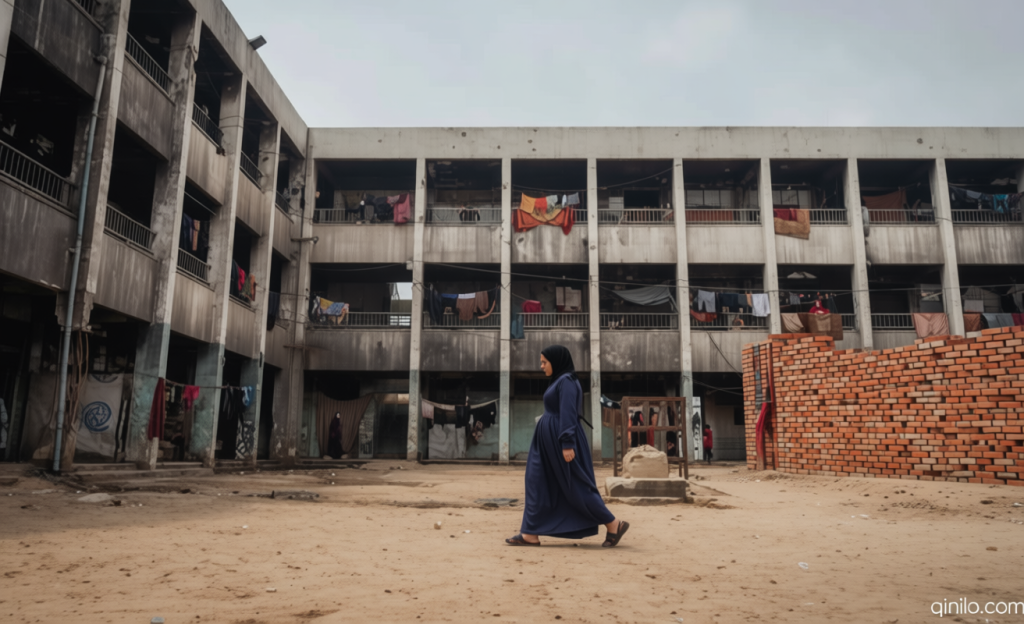
Meanwhile, the humanitarian crisis has escalated, with reports of overcrowded shelters, limited access to clean water, and deteriorating healthcare systems. Aid workers describe a dire situation where the population is on the brink of despair, exacerbated by the ongoing conflict and the international community’s slow response. The Security Council is expected to address these issues by reviewing the effectiveness of aid mechanisms and exploring new strategies to alleviate the suffering of Gazans.
As the meeting progresses, the stakes have never been higher. The council’s ability to broker a lasting peace will depend on its capacity to balance the competing interests of the parties involved. With time running out for a comprehensive agreement, delegates are under pressure to find common ground. “This is a pivotal moment for the Middle East,” one delegate emphasized. “We must seize the opportunity to create a durable peace.”
The debate in the Security Council reflects the broader challenges of the conflict, where political and security objectives often collide. The outcomes of these discussions will shape the future of Gaza and the West Bank, influencing the prospects for a peaceful resolution. As the session continues, the international community watches closely, hoping for a breakthrough that will bring stability to a region in crisis.
In conclusion, the Security Council’s current deliberations underscore the complexity of the situation in Gaza and the West Bank. While progress has been slow, the council remains a critical forum for shaping the region’s future. The next steps will determine whether the fragile ceasefire can be transformed into a lasting peace or if the conflict will continue to deepen. The path forward requires not only political will but also a coordinated effort to address the immediate and long-term needs of the people affected by the ongoing violence.