
World News in Brief: Updates from Gaza, the West Bank and Afghanistan, UN development reforms, change at the top of WFP
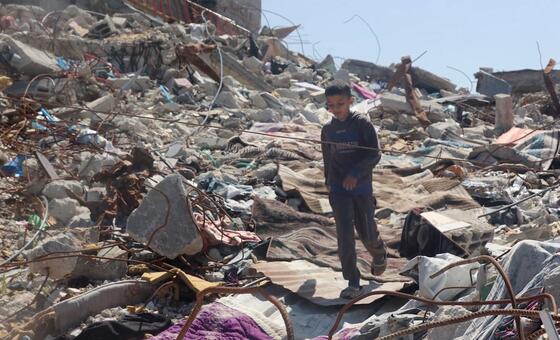
Gaza: Fear in the Shadow of the Yellow Line
Qinilo.com – Families residing in Gaza along or adjacent to the Israeli military’s so-called Yellow Line have shared with the United Nations their persistent anxiety about the threat of violence. The area, which serves as a buffer zone between Palestinian territories and Israeli-controlled zones, has become a focal point for daily danger. This tension follows recent reports from the United Nations Relief and Works Agency (UNRWA) highlighting a significant rise in military operations across the Gaza Strip, leading to more casualties and widespread displacement of civilians.
UNRWA Reports Escalating Military Activity
Amid these developments, UNRWA has documented a sharp increase in armed confrontations, particularly in areas near the border. The agency’s findings underscore how this surge has intensified the humanitarian crisis, forcing many families to abandon their homes and seek refuge in safer zones. One resident, Ahmed Talal, who lives in the al-Shaaf neighborhood of al-Zeitoun, recounted the harrowing reality of life under this regime. Just 100 meters from the Yellow Line, his family has been repeatedly targeted by Israeli forces.
“By God, we are very afraid and we keep sheltering inside the house,” Talal said. He described the relentless sound of heavy gunfire from tanks and how bullets have struck the upper portion of their dwelling. The fear is not unfounded—his family has been forced to leave their neighborhood 12 times since the conflict began, with the most recent displacement leaving them homeless for over six months.
West Bank: Rising Tensions and Settler Violence
Independent human rights experts have raised alarms about the intensifying threat of settler attacks in the Occupied Palestinian Territory, particularly in East Jerusalem. A group of 13 Special Rapporteurs, appointed by the Human Rights Council, highlighted how these incursions have increasingly disrupted the lives of Palestinians and fueled their displacement. The experts’ report noted a concerning trend: at least 13 Palestinians have lost their lives and nearly 500 others have been injured in the first half of the year alone.
Area C and the Humanitarian Crisis
The focus of these attacks has shifted toward communities in Area C, a region in the West Bank under full Israeli administrative control. The Jordan Valley and South Hebron Hills have been identified as areas experiencing heightened pressure, with frequent raids and infrastructure damage reported. These actions have not only destabilized local populations but also strained their access to essential services and land. For example, in the South Hebron Hills, residents of Umm al-Kheir have faced repeated assaults, including home demolitions and systematic destruction of resources.
“Communities in Area C now face escalating risks of displacement and settlement expansion,” the experts stated. They emphasized the need for Israel to curtail support for settlements and hold perpetrators of violence accountable. Additionally, they called for stronger safeguards to protect Palestinian communities and facilitate the safe return of those displaced by recent conflicts.
Reforms Strengthening the UN Development System
As the global development landscape evolves, the United Nations Secretary-General addressed the Economic and Social Council (ECOSOC) to highlight recent reforms aimed at enhancing the efficiency and alignment of the UN development system with national priorities. These changes, according to the Secretary-General, have made the system more cohesive and transparent, ensuring better coordination with governments and local initiatives. However, he cautioned that declining financial resources could jeopardize these gains.
Progress and Persistent Challenges
The Secretary-General noted that 94 percent of member states now recognize the effectiveness of UN development programs, a marked improvement from previous years. He also pointed to the growing acknowledgment of Resident Coordinators as vital figures in country-specific efforts, with their role now endorsed by 90 percent of governments as of 2025—a significant jump from 62 percent in 2019. Stéphane Dujarric, the UN Spokesperson, cited specific achievements, including the provision of food assistance to 121 million people and the vaccination of 191 million children against measles, even in conflict zones. Social protection initiatives have also expanded, covering 80 million individuals, while central health services now serve over half a billion people since 2018.
“The UN Development system delivered in 2025—121 million people were reached with food assistance, 191 million children were vaccinated against measles, often in war-like conditions, social protection was extended to 80 million people, and over a half a billion more were covered by central health services since 2018,” Dujarric said.
WFP Leadership Transition: McCain’s Impact and Skau’s Ascension
As the World Food Programme (WFP) prepares for a new era, Secretary-General António Guterres praised Cindy McCain’s tenure, acknowledging her transformative leadership. McCain, who has led the agency since 2023, is stepping down, with Carl Skau, her long-time Deputy Executive Director, set to assume the role. Guterres highlighted how McCain’s strategies have streamlined operations, enabling the WFP to respond more swiftly to humanitarian crises worldwide.
McCain’s Legacy and the Path Forward
Under McCain’s guidance, the WFP has maintained critical life-saving operations, reaching nearly 100 million people annually through its initiatives. Her focus on accountability and diplomatic engagement has also strengthened the agency’s partnerships and funding mechanisms. Guterres emphasized her commitment to prioritizing the well-being of beneficiaries and staff, calling her efforts a cornerstone of the WFP’s modernization.
“Under her leadership, WFP became leaner, faster, and more agile in responding to global crises,” Guterres stated. He expressed gratitude for McCain’s unwavering dedication to combating hunger and malnutrition, noting her contributions to securing new funding and expanding humanitarian collaborations.
Skau’s Role in a Crucial Period
Skau’s promotion to the top position comes at a pivotal time, as the WFP faces mounting challenges in delivering aid amid ongoing conflicts and resource constraints. The Secretary-General’s tribute to McCain underscores the importance of her leadership, which has reshaped the agency’s operational framework. Meanwhile, Skau’s experience as Deputy Executive Director since May 2023 positions him to navigate these complexities effectively. His leadership will be tested by the need to maintain the WFP’s momentum while addressing the financial pressures that threaten its global outreach.
The Secretary-General’s remarks also echoed concerns about the funding compact, urging member states to meet the 30 percent core funding target to ensure the WFP’s continued success. With less than 1,700 days remaining until the 2030 Sustainable Development Goals deadline, many nations are grappling with economic uncertainties, including slower growth, rising debt, and limited fiscal capacity. These factors have put the UN development system at risk, emphasizing the urgency of securing stable and adaptable financial support.
As the WFP leadership transitions, the agency’s focus remains on its core mission: alleviating hunger and providing essential aid to vulnerable populations. The reforms in the broader UN system, coupled with the WFP’s operational improvements, reflect a concerted effort to align global initiatives with the needs of communities on the ground. However, the success of these efforts hinges on sustained investment and political will to address the intertwined challenges of conflict, displacement, and resource allocation.