
Yemen: Hunger crisis deepens as funding cuts leave millions without support
Yemen: Hunger Crisis Intensifies Amid Aid Cuts
Qinilo.com – Yemen – As international aid continues to dwindle, the situation in Yemen is worsening, with over half the population in government-controlled regions facing extreme food shortages. According to the most recent report by the United Nations’ global food security initiative, this alarming trend could escalate further unless funding is rapidly increased.
Acute Food Insecurity Surpasses 47%
Currently, approximately five million individuals—representing 47% of Yemen’s population—are enduring crisis-level or higher acute food insecurity. This includes an additional 1.4 million people in the emergency phase, a figure anticipated to rise throughout the year.
The upcoming lean season, spanning June to September, is forecast to elevate the number of those in emergency conditions to 1.5 million. Even the post-harvest months from October to December 2026 are unlikely to halt the spread of hardship, with projections indicating a further surge to 1.8 million people in the emergency category.
Health Challenges and Daily Struggles
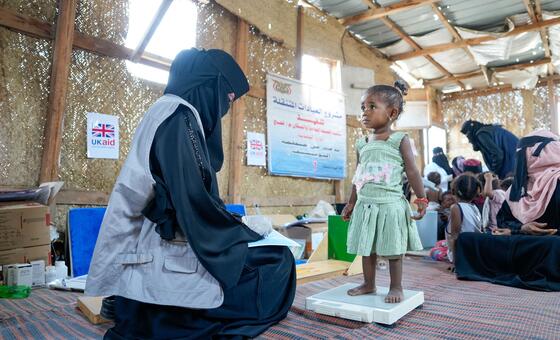
Healthcare access has become increasingly difficult for displaced communities, particularly in overcrowded camps. In Al-Shaab camp, where families endure tough living conditions, health issues are routine. Overcrowding and poor sanitation heighten the risk of vector-borne diseases, including malaria, especially for women and children.
“Sometimes, at night, a child suddenly gets a fever, diarrhoea or vomiting, and there are no emergency services available for us,” said Abeer Abdulwarith Mohammed Saeed, a 21-year-old mother in Aden. “If I, my husband or my children get sick, we cannot get treatment because of our limited means.”
To address this, the World Health Organization, working with local partners in Aden and Marib, has deployed mobile clinics to reach displaced families. These teams conduct early screenings for illnesses like malaria and dengue, providing critical care in areas distant from medical facilities.
Drivers of Malnutrition
Long-term conflict, compounded by climate disruptions and economic instability, has driven Yemen’s high malnutrition rates. Reduced dietary variety, limited access to nutrition services, and deteriorating living conditions are intensifying the risk of acute malnutrition, particularly for pregnant and nursing mothers, as well as young children.
Compounding these challenges are irregular wages, soaring food and fuel costs, and declining agricultural output. Despite 60% of households relying on farming for sustenance, extreme weather, pest infestations, and disrupted supply chains are straining food production. This leaves families unable to afford even the most basic necessities.
The UN agencies emphasize the urgent need for expanded funding to support food aid, healthcare, and agricultural recovery. Without swift and consistent action, millions risk irreversible harm, including worsening hunger and loss of livelihoods.