
Afghanistan faces ‘lost generation of talent and potential,’ Security Council hears
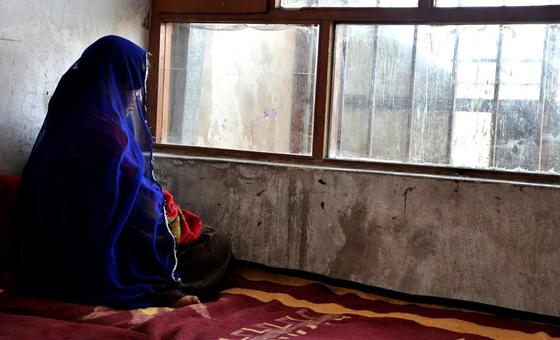
Afghanistan’s Lost Generation of Talent and Potential: Security Council Convenes to Address Crisis
Qinilo.com – Afghanistan faces a lost generation of talent, with senior officials and civil society advocates warning of long-term consequences during a recent Security Council session. The nation’s ongoing challenges, including deteriorating humanitarian conditions, gender restrictions, and economic instability, threaten to undermine decades of progress and deprive millions of young people of opportunities to thrive. As the de facto authorities consolidate control, concerns grow that Afghanistan is on the brink of a demographic crisis, where the aspirations of its youth are being stifled by systemic barriers.
Stability Masks Persistent Challenges
Georgette Gagnon, the UN Deputy Special Representative overseeing the UN mission in Afghanistan (UNAMA), described the current situation as one of “increasing control by the de facto authorities without a clear end-state.” While the Taliban has managed to restore some security, the lack of political inclusivity and economic revival has left communities struggling. Gagnon emphasized that this stability is temporary, as underlying issues—such as restricted freedoms and shrinking opportunities—continue to jeopardize Afghanistan’s future.
“The country’s de facto authorities face no meaningful armed or political challenge, yet the situation remains fragile,” Gagnon stated. “Without urgent action, the dream of a stable, inclusive Afghanistan will slip further away.”
Demographic Pressures and Economic Strain
The rapid return of nearly 5.9 million Afghans since 2023 has exacerbated the strain on a country already grappling with economic collapse. This influx, combined with an estimated 2.8 million more expected to return this year, has placed immense pressure on resources, infrastructure, and employment sectors. Gagnon warned that without intervention, Afghanistan faces a scenario where its young population—many of whom are part of the lost generation of talent—will be left without prospects for sustainable livelihoods.
“Afghanistan remains one of the world’s largest and most complex humanitarian crises,” said Edem Wosornu, Director of OCHA’s Crisis Response Division. “Nearly half the population requires immediate assistance, and the loss of human capital is accelerating.”
Humanitarian conditions have worsened, with 21.9 million people now in need of aid. Factors such as conflict, climate shocks, and underfunding have intensified the crisis, leaving vulnerable populations without access to basic necessities. Wosornu highlighted the growing food insecurity, noting that 4.7 million Afghans are now suffering from severe hunger—a 50% increase from the previous year. This crisis not only affects survival but also threatens the ability of Afghanistan’s youth to pursue education and employment, further deepening the impact of the lost generation of talent.
Gender Restrictions Undermine Social and Economic Progress
Metra Mehran, founder of the Afghanistan Justice Archive, described how the Taliban’s policies have institutionalized gender oppression. Since August 2021, over 230 decrees have been issued to restrict women’s rights, including their access to education, employment, and public participation. These measures have created a system where men effectively own their wives, and women resisting the new order face arrests, violence, and intimidation.
“Women are being systematically excluded from the fabric of society,” Mehran told the Council. “This lost generation of talent is not just a result of economic decline—it is a direct consequence of denying young women the right to contribute to their nation’s development.”
The recently enacted Criminal Procedure Code has formalized discrimination, enabling legal violence against women and girls. Mehran urged international bodies to enforce their legal obligations under international law to reverse these policies. “Without safeguarding women’s rights, the lost generation of talent will never be reclaimed,” she asserted, underscoring the urgency of global action.
Humanitarian Crisis Intensifies
The humanitarian crisis has reached alarming levels, with renewed fighting along the Afghanistan-Pakistan border displacing over 100,000 people this year. This displacement has cut off vulnerable communities from aid for weeks, deepening the food insecurity crisis. Wosornu reported that 3.7 million children now suffer from acute malnutrition, a stark increase from previous years. These statistics paint a grim picture of a nation where survival is the primary concern, and the potential of its people is being sacrificed on the altar of instability.
“Hunger is growing across Afghanistan,” Wosornu said. “The crisis is not just about numbers—it is about the human cost of neglecting basic needs and stifling opportunity.”
Reports indicate that some families are making desperate choices to survive, including selling daughters, as gender restrictions continue to disrupt humanitarian efforts. The loss of education and employment opportunities has compounded the crisis, leaving the lost generation of talent without a pathway to recovery. Without immediate support, the cycle of hardship will persist, with far-reaching consequences for Afghanistan’s future.
Calls for Reversing Restrictions and Rebuilding Hope
Gagnon reiterated the need for authorities to reverse policies limiting women’s rights, including the exclusion of Afghan female UN staff from premises. She stressed that pragmatic engagement with the de facto government is essential to securing the long-term stability of the country. “Even as progress is incremental, the lost generation of talent must not be left behind,” she said, calling for sustained dialogue and investment in education and employment programs.
As the Security Council debates the path forward, the consensus is clear: Afghanistan’s lost generation of talent is at risk of becoming a permanent underclass. The combination of political control, economic decline, and gender-based restrictions has created a perfect storm of challenges that threaten to define the nation’s next decade. With international support and domestic reform, there is still hope to avert the worst outcomes and restore the country’s potential. But time is running out, and the stakes have never been higher.