
Ebola in DR Congo: first month of outbreak sees record number of cases – UN humanitarians
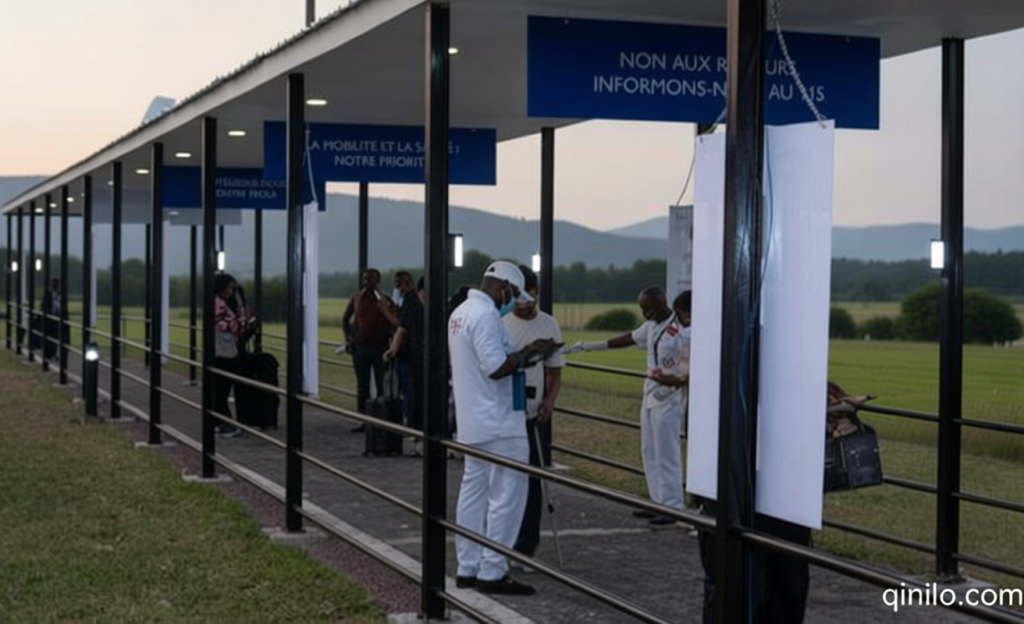
Record Ebola Cases in DR Congo Signal Rapid Spread – UN Humanitarians Report
Qinilo.com – As of June 2026, the Ebola outbreak in DR Congo has reached unprecedented levels, with the virus spreading more rapidly than in previous years. The United Nations humanitarians have reported a staggering 1,048 confirmed cases in the first month of the outbreak, resulting in 267 deaths. This surge has raised alarm across the region, prompting urgent measures to control the spread and protect vulnerable populations.
“The speed of transmission in this outbreak is a cause for serious concern,” said Dr. Abdirahman Mahamud, WHO’s Health Emergency Alert and Response Operations Director. “We are witnessing a scenario that has never been recorded in the first month of any Ebola outbreak on the African continent.”
The Bundibugyo strain, responsible for this latest outbreak, has shown a particularly aggressive pattern. Officials note that achieving 250 fatalities in just 37 days is a sharp contrast to the 78 days required during the 2014–2016 West Africa epidemic and 130 days for the 2018–2019 outbreak. This acceleration underscores the need for a robust and immediate response to prevent further escalation.
Community Impact and Cross-Border Containment Efforts
The spread of Ebola in DR Congo has not only affected healthcare systems but also disrupted daily life for millions. Ugochi Daniels, Deputy Director General for Operations at the International Organization for Migration (IOM), highlighted the psychological and economic toll on families. “Everyday life has become fraught with risk,” she stated, noting that even basic activities like visiting markets or schools now carry the potential for infection.
“The outbreak is concentrated in border regions, where people frequently cross between DRC and neighboring countries like Uganda and Rwanda. This makes containment efforts more complex, as informal pathways often bypass official checkpoints,” Daniels explained. “Without consistent monitoring, the virus can easily move across borders, complicating regional response strategies.”
Despite the challenges, humanitarian agencies have made significant strides in tracking movement. Since the outbreak began, over a million screenings have been conducted at entry points and transportation routes. However, the IOM and its partners are still facing a $35 million funding gap, which has hindered the full implementation of cross-border coordination plans.
Response Strategies and Expanded Infrastructure
As the outbreak intensifies, the response from the WHO and other organizations has evolved to meet the growing demand. Dr. Mahamud noted that treatment facilities have been rapidly scaled up, with more than 500 beds now available in 19 health zones. “This expansion is critical to ensuring that patients receive timely care and reducing the risk of secondary infections,” he emphasized.
“We have also increased our diagnostic capacity significantly. From just 30 daily tests in Kinshasa, we now conduct over 2,000 tests per day, supported by a network of eight decentralized labs in Ituri, North Kivu, and South Kivu,” Dr. Mahamud added. “This improved testing infrastructure allows us to identify cases faster and implement targeted interventions.”
These efforts are part of a broader strategy to enhance community resilience. By improving access to medical facilities and increasing the availability of diagnostic tools, responders aim to reduce the spread of the virus and mitigate its impact on the population. However, the success of these initiatives depends on sustained funding and local cooperation.
Additionally, the focus on safe burials has been a cornerstone of containment. Paolo Cravero, IFRC’s Communications and Media Relations Officer, pointed out that this measure is vital in preventing transmission through contact with infected bodies. “Despite the challenges posed by remote locations and security threats, we have distributed specialized kits and body bags to impacted communities to facilitate safe burials,” he stated.
“Rumors and misinformation have further complicated our efforts. For instance, some communities initially resisted safe burial practices, fearing the disease was a form of punishment from the spiritual realm. Addressing these beliefs through community engagement and education is essential to our success,” Cravero explained.
With the outbreak continuing to spread, the situation in DR Congo remains a global priority. The UN and its partners are urging increased financial and logistical support to ensure the response remains effective. As the virus moves through densely populated areas, the need for coordinated action has never been more urgent.