
Growing up with sirens: UN child rights envoy on the toll of the Ukraine-Russia war
Growing Up with Sirens: UN Child Rights Envoy on the Toll of the Ukraine-Russia War
Qinilo.com – Children in Ukraine have grown up under the constant threat of war, with the sound of sirens becoming an inseparable part of their daily lives. The ongoing conflict has forced many to attend underground schools or rely on remote learning, as the persistent danger of air raids has disrupted education and daily routines. This relentless exposure to sirens has left them grappling with emotional stress, fear, and uncertainty, shaping their childhoods in ways that are both visible and deeply personal.
Impact on Education and Mental Health
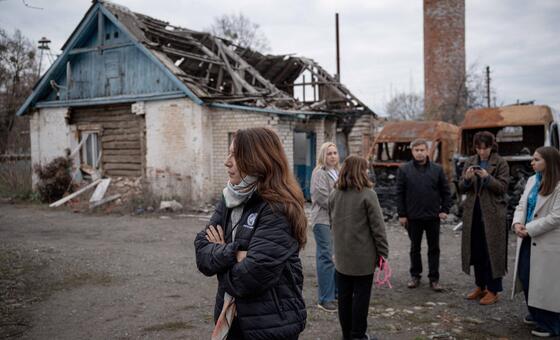
Vanessa Frazier, the Secretary-General’s Special Representative for Children and Armed Conflict, has witnessed firsthand the devastating effects of the war on Ukrainian children. During her recent visits, she highlighted how the conflict has not only displaced millions but also created a generation that has had to adapt to learning in basements, tunnels, or through screens. The emotional toll of sirens, which once signaled danger in the context of a war, has now become a symbol of the ever-present anxiety that defines their youth.
“The war in Ukraine is very tough. I was struck by several issues. First, children are impacted disproportionately, especially when it comes to education.”
Frazier noted that the war began shortly after the COVID-19 pandemic, leaving many children to adapt to online schooling for two years. Over the past four additional years, this has extended to a total of six years spent learning remotely, a reality that deeply resonated with her as a parent. The combination of war and pandemic has created a unique set of challenges, with children facing not only the physical destruction of infrastructure but also the psychological strain of prolonged displacement and uncertainty.
Accountability and Russia’s Role
During her visit to the Russian Federation, Frazier emphasized the need for accountability in addressing the harm inflicted on children. She outlined six grave violations against children, including attacks on schools and hospitals, recruitment of minors, and the use of children as spies or messengers. The Russian armed forces have been accused of targeting educational institutions, further exacerbating the disruption to learning and the trauma experienced by young students.
“When I went to Russia, I was wearing two hats. As the Special Representative for Children and Armed Conflict, I spoke specifically about the six grave violations against children.”
Frazier explained that the United Nations requires time-bound commitment plans from conflict parties to delist them from the list of violators. These plans must be verified by the UN to ensure they address the harm inflicted on children. She also addressed the General Assembly resolution from December 2025, which focuses on missing Ukrainian children. The resolution called for the Secretary-General’s good offices to coordinate the return of these children to Ukraine, ensuring access to safety and engaging Member States in the process.
Collaboration and Ongoing Efforts
Frazier shared that the Russian Federation was receptive to discussions on both the commitment process and the resolution for missing children. While progress was noted, negotiations remain ongoing to finalize specific actions. The envoy praised the collaborative efforts of Ukraine’s government and local organizations, alongside UNICEF and NGOs, in creating safe learning environments. Underground schools and metro-based education programs have become critical in enabling children to continue their studies, even as sirens echo through their neighborhoods.
“The Russian Federation was very open to our discussions. There still needs to be negotiation on how we will agree on the commitments that need to be carried out.”
Her visit to Belgorod, a frontline city, allowed her to observe conditions firsthand, including schools, a kindergarten, and a pediatric hospital. While this was not a verification mission, which has to be carried out under very strict conditions, it was still very important to be there and to have access. Frazier stressed the importance of continued engagement with all parties to ensure the protection of children’s rights and to address the long-term consequences of the war on their development.
The ongoing conflict has not only disrupted education but also altered the very fabric of childhood in Ukraine. Children now associate sirens with the start of lessons, the sound of bombs, and the fear of being separated from their families. This unique experience has shaped their understanding of the world, making the focus on “growing up with sirens” a powerful lens through which to examine the broader impact of the war on child rights. As the international community continues to support efforts for accountability and education, the resilience of Ukrainian children remains a testament to their strength in the face of adversity.