
Southwest Pacific’s last tropical glacier could vanish within months
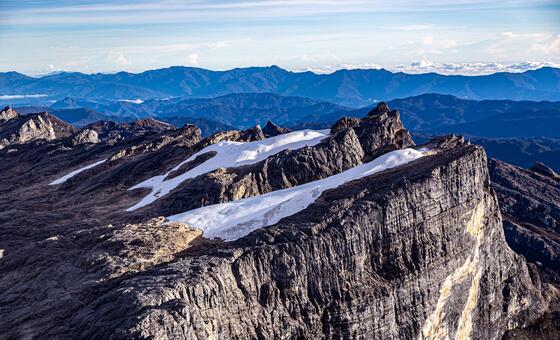
Southwest Pacific’s Last Tropical Glacier at Risk of Disappearing Soon
Qinilo.com – The Southwest Pacific’s last tropical glacier is facing an imminent threat of vanishing within the next few months, according to recent climate assessments. This rare and vital ice mass, which has persisted for millennia, now stands on the brink due to accelerated global warming. The World Meteorological Organization (WMO) and regional partners have highlighted the urgency of the situation, warning that rising temperatures and intensified oceanic changes are pushing this unique glacial feature toward irreversible retreat.
Climate Trends and the Fate of the Tropical Glacier
Southwest Pacific s last tropical glacier is located in a remote highland region, making it one of the few remaining glaciers in the tropics. Its survival has been a symbol of resilience in the face of climate change, but 2025 has marked a critical turning point. The glacier’s thinning has been linked to prolonged heatwaves and oceanic warming, which have disrupted the delicate balance of its ecosystem. Scientists warn that without significant intervention, the glacier could disappear entirely by the end of this year.
Global temperature anomalies in the Southwest Pacific have reached alarming levels, with 2025 recording the second-highest warmth since the late 19th century. Surface air temperatures in the region exceeded the 1991–2020 average by 0.37°C, a trend that has persisted for over three decades. This warming is not just a distant threat but a present reality, with the Southwest Pacific s last tropical glacier becoming a focal point for climate scientists and policymakers.
Marine Heatwaves and Their Cascade Effects
Southwest Pacific s last tropical glacier is part of a broader environmental crisis affecting the region’s coastal and marine ecosystems. Marine heatwaves, which have grown more frequent and intense in recent years, are now a recurring feature, with 2025 witnessing the highest coverage in a year without El Niño. These extreme events have triggered cascading impacts, from coral bleaching to shifts in fish populations, further stressing the Southwest Pacific s last tropical glacier’s stability.
As ocean temperatures rise, the glacier’s meltwater contribution to local rivers and freshwater systems is diminishing. This not only threatens the glacier itself but also the communities that rely on its seasonal runoff for agriculture and drinking water. The WMO report underscores that such changes are accelerating, with the Southwest Pacific s last tropical glacier serving as a stark indicator of the region’s climate vulnerability.
“The Southwest Pacific’s tropical glacier is a rare remnant of a stable climate, and its rapid decline signals a new era of environmental upheaval,” noted a climatologist in the WMO report.
Sea-Level Rise and Ocean Acidification
Sea-level rise in the Southwest Pacific has intensified, with an average increase of 3.7 millimeters per year from 1999 to 2025. This trend is particularly concerning for the glacier’s surrounding areas, where rising waters are eroding coastal habitats and threatening biodiversity. Simultaneously, ocean acidification has reached historic lows, driven by the region’s absorption of excess carbon dioxide. These dual pressures are compounding the risks to the Southwest Pacific s last tropical glacier and its fragile ecosystem.
The melting of the glacier is also influencing regional weather patterns. As ice masses shrink, they reduce the Earth’s albedo effect, leading to further warming. This creates a feedback loop that accelerates the glacier’s decline. The WMO emphasizes that the Southwest Pacific s last tropical glacier is not only a climatic anomaly but a key barometer for the health of the planet’s cryosphere.
Regional Impacts and Policy Responses
The potential disappearance of the Southwest Pacific s last tropical glacier has far-reaching consequences for the region’s climate resilience. Island nations, which depend on predictable weather and stable sea levels, are particularly at risk. The ESCAP Executive Secretary warned that the glacier’s fate reflects the interconnected nature of climate threats, including food security, public health, and economic stability in the Southwest Pacific.
Efforts to mitigate the glacier’s loss include international collaborations and regional adaptation strategies. However, the scale of the challenge remains daunting, with current mitigation measures falling short of the required action. The Southwest Pacific s last tropical glacier’s survival hinges on a combination of global emissions reductions and localized conservation efforts, both of which are critical for safeguarding the region’s environmental heritage.
“The glacier’s disappearance would not only mark the end of a natural landmark but also a warning for the future of our planet’s climate systems,” stated a researcher specializing in glacial dynamics.
As the climate crisis deepens, the Southwest Pacific s last tropical glacier stands as a powerful reminder of the urgency needed to address global warming. Its potential loss within months underscores the need for immediate action, ensuring that this irreplaceable feature is not lost to the relentless advance of a warming world.