
UN envoy urges parties to ‘stay the course’ towards peace in eastern DR Congo
UN Envoy Urges Parties to Stay the Course in Eastern DR Congo
New Leadership and Peace Efforts
Qinilo.com – The UN mission in the Democratic Republic of the Congo (DRC) has seen a change in leadership, with James Swan assuming the role of special envoy in March. In his inaugural briefing to the Security Council, Swan reiterated the importance of sustaining progress in the peace processes aimed at stabilizing the volatile eastern region. His message underscored the need for all stakeholders to remain committed to the path of reconciliation, despite the challenges that continue to test their resolve.
Swan’s call for consistency comes nearly a year after the DRC and Rwanda signed a landmark peace agreement in Washington, DC. This accord, along with the Doha Framework for a Comprehensive Peace Agreement—negotiated in Qatar—and African Union (AU)-led mediation, has created a unified strategy to resolve the long-standing conflict in eastern DRC. However, the success of these initiatives depends on the active participation of all signatories, including armed groups and regional actors, to fulfill their commitments fully.
“Maintaining this momentum is now critical, and all signatories must fully execute their pledged commitments,” Swan stated during the briefing.
Current Conflict Landscape
Despite ongoing diplomatic efforts, the eastern DRC remains a hotspot for violence, with conflicts persisting in North Kivu, South Kivu, and Ituri provinces. Civilians continue to face grave risks as clashes between armed groups and military forces escalate, often involving sophisticated weaponry that intensifies the humanitarian toll. The instability has led to displacement, economic disruption, and a growing sense of urgency among international actors to support peace.
The primary conflict involves the Alliance Fleuve Congo/23rd of March Movement (AFC/M23), which has been supported by Rwandan forces, and the Congolese Army (FARDC), allied with the Wazalendo group. In certain regions, FARDC also collaborates with the Democratic Forces for the Freedom of Rwanda (FDLR), an armed coalition composed of former perpetrators of the 1994 Tutsi genocide. These dynamics have contributed to a complex web of alliances and rivalries that complicate peacebuilding efforts.
Clashes are concentrated in key areas such as Rubaya, a vital mining region, and Rutshuru in North Kivu. Additionally, hostilities have reignited in Beni territory, where recent attacks have caused significant civilian casualties. The persistence of these conflicts highlights the fragility of the peace process and the need for continued vigilance from all parties.
Monitoring and Support Mechanisms
Swan emphasized the importance of accelerating the implementation of the ceasefire monitoring framework established under the Doha process. MONUSCO has already allocated logistical and security resources to this initiative, including office space in Goma and critical equipment. These measures aim to bolster the framework’s effectiveness, ensuring that peacekeepers can track troop movements and prevent escalation in conflict-prone zones.
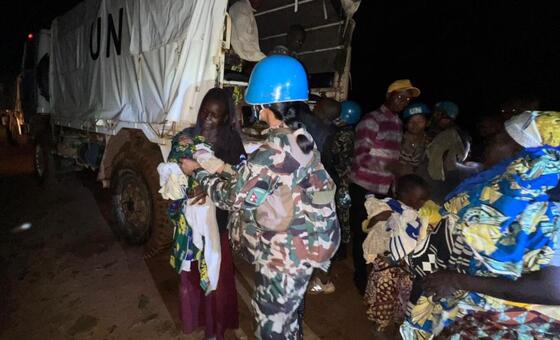
Since the last Security Council meeting on the DRC, peacekeepers and Congolese troops have intensified their patrols in areas affected by Allied Democratic Forces (ADF) attacks. Combined operations near internally displaced persons (IDP) camps have led to over 2,000 patrols, enhancing local security and providing immediate protection to vulnerable communities. Swan praised these efforts but warned that sustained action is necessary to maintain progress.
ADF Threat and Casualties
The envoy also highlighted the persistent threat posed by the Allied Democratic Forces (ADF), which has claimed 287 civilian lives in Ituri since the last Security Council meeting. Of these, 44 were women, underscoring the gender-specific violence that often accompanies armed conflict. While the group’s activities eased temporarily earlier this year, they have resumed in Beni, resulting in 66 deaths, including 17 women and three children, according to MONUSCO’s latest reports.
MONUSCO has documented 632 civilian fatalities in North Kivu and Ituri since March, alongside 1,221 reported human rights violations. These include widespread sexual violence by armed groups and military personnel, affecting 2,968 individuals—of whom 392 are women and 378 are children. The combination of armed conflict and human rights abuses continues to strain the region’s already fragile social fabric.
Humanitarian Crisis and Ebola Outbreak
The humanitarian situation in the DRC remains dire, with nearly 27 million people—over a quarter of the population—suffering from food insecurity. A $1.4 billion aid plan designed to support 7.3 million individuals this year has received just over 53% of its required funding, leaving many communities without essential resources. The UN envoy urged increased financial contributions to address the growing needs of affected populations.
Compounding the crisis is an Ebola outbreak declared on 15 May, which is spreading rapidly in conflict zones and urban areas with limited healthcare infrastructure. This has heightened concerns about the disease’s transmission, particularly in regions where violence disrupts health services and evacuation efforts. Swan called for urgent coordination between humanitarian agencies and local authorities to contain the outbreak and protect civilian lives.
UN’s Commitment Amid Challenges
Swan concluded his briefing by urging all parties to uphold their pledges and continue advancing the peace process, despite the UN’s current liquidity crisis and the region’s escalating demands. He acknowledged the financial constraints facing MONUSCO but stressed that the mission remains dedicated to its objectives. The envoy also emphasized the need for sustained political will and international support to ensure the peace process is not derailed by internal or external pressures.