
Venezuela earthquakes: International rescue teams join the search for survivors as death toll surpasses 1,400
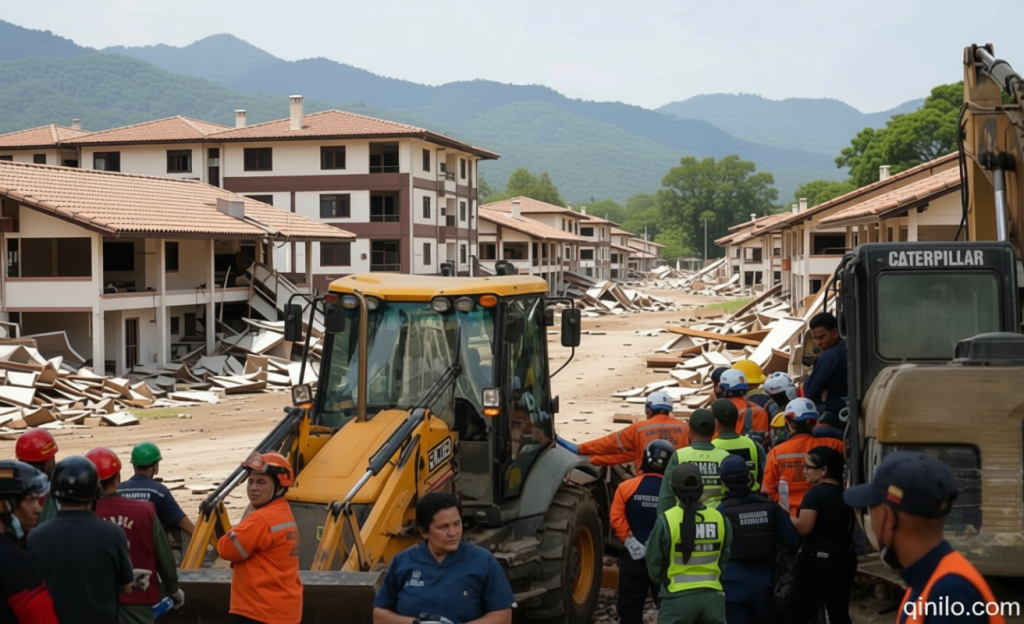
Venezuela Earthquakes: Over 1,400 Dead, Global Rescue Teams Aid Relief Efforts
Qinilo.com – The Venezuela earthquakes struck northern regions on 24 June, leaving a devastating toll of over 1,400 confirmed fatalities and thousands injured. In response, more than 2,000 rescue personnel from 27 countries have been deployed to assist in search and rescue operations. The United Nations has played a pivotal role in organizing this global effort, mobilizing 44 urban search and rescue teams that have brought 2,245 specialists and 140 trained search dogs to the affected zones. These teams are working tirelessly to extract survivors from collapsed structures and deliver urgent medical aid.
Seismic Impact and Emergency Response
The twin earthquakes, measuring 7.2 and 7.5 on the Richter scale, caused widespread devastation, particularly in Carabobo, La Guaira, Caracas, and Aragua. Reports indicate that infrastructure, including roads, bridges, and power grids, has sustained significant damage, disrupting communication and transportation networks. The UN’s Office for the Coordination of Humanitarian Affairs (OCHA) has activated emergency protocols to streamline aid distribution, ensuring that resources reach those most in need. As rescue missions continue, the focus remains on locating survivors in the rubble, with teams working in challenging conditions to maximize efficiency.
“The scale of the disaster requires a coordinated, multi-national response,” said a UN official, emphasizing the importance of international collaboration in Venezuela’s recovery efforts. “Tools like RAPIDA enable us to assess damage quickly, which is critical for allocating resources effectively.”
Damage Assessment and Economic Repercussions
Preliminary satellite data from the United Nations Development Programme (UNDP) estimates the total physical damage caused by the Venezuela earthquakes at approximately $6.7 billion, or 6% of the country’s GDP. This figure, generated using the RAPIDA tool, ranges between $4.7 billion and $8.7 billion, reflecting the extensive destruction across 1.7 million structures. The quakes also exposed vulnerabilities in Venezuela’s infrastructure, with nighttime lighting levels in Carabobo and other regions dropping sharply, indicating potential power outages and disrupted electricity supply.
Over 8.6 million people experienced moderate to severe shaking, with around 2.1 million subjected to the strongest tremors. The UN has highlighted that the impact of these earthquakes extends beyond immediate casualties, affecting livelihoods, displacing families, and straining the country’s already fragile economic situation. With many communities relying on informal networks for support, the challenge of restoring basic services and ensuring food security has become a key priority in the aftermath.
Global Support and Ongoing Operations
Rescue teams have arrived from Argentina, Brazil, Canada, Chile, Colombia, Ecuador, El Salvador, Guatemala, Mexico, Panama, Peru, and the Dominican Republic, joined by international partners such as Germany, Czechia, Spain, the United States, France, Italy, Jordan, Lithuania, the Netherlands, Qatar, the United Kingdom, Serbia, Syria, Switzerland, and Türkiye. These teams are operating in tandem with local authorities, using advanced equipment and techniques to navigate the damaged terrain. As of 27 June, the death toll has surpassed 1,400, with 3,238 injuries reported, and efforts to locate more survivors are ongoing.
The coordination of these international efforts has been a testament to global solidarity, with the UN facilitating communication and logistics. Despite the scale of the disaster, search and rescue operations have shown resilience, with teams working in shifts to cover all affected areas. However, challenges such as limited access to remote regions, resource shortages, and the need for sustained support remain. The UN has urged continued funding and assistance to ensure that the recovery process is comprehensive and equitable.
“Every hour spent in the field brings us closer to saving lives,” remarked a spokesperson from the United Nations’ disaster response unit. “The dedication of these teams is a beacon of hope in a time of crisis.”
Humanitarian Efforts and Long-Term Recovery
As the immediate rescue phase continues, humanitarian organizations are ramping up their efforts to provide long-term relief. The UN has established distribution centers to supply food, water, and medical care to affected populations, while local NGOs are mobilizing volunteers to assist with cleanup and rebuilding. In addition to search and rescue, the focus is shifting toward addressing the psychological trauma of survivors, with mental health professionals deployed to support communities in distress.
The Venezuela earthquakes have underscored the importance of preparedness and resilience in the face of natural disasters. With the country’s infrastructure still recovering from previous crises, the current situation highlights the need for robust disaster response mechanisms. The UN has called for increased investment in early warning systems and infrastructure reinforcement to mitigate future risks. Meanwhile, the global community continues to offer support, ensuring that Venezuela’s people receive the aid they need to rebuild their lives in the wake of this catastrophic event.