
UN scraps rule forcing it to repay money it never received
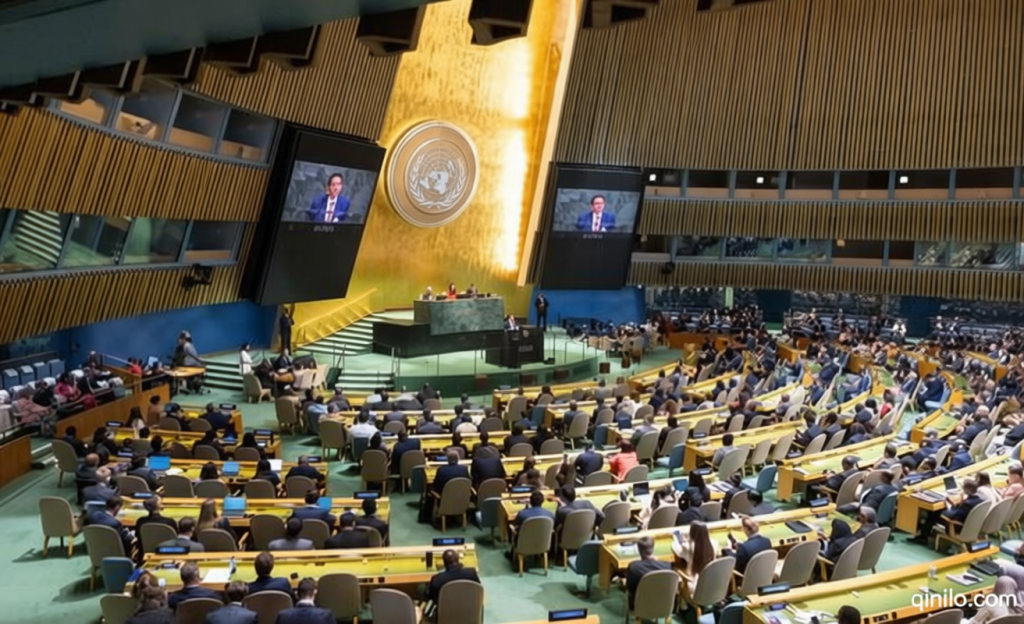
UN Reforms Financial Rule to Address Unpaid Contributions
End of a Decades-Long Policy
Qinilo.com – The United Nations has revised a long-standing financial regulation that mandated returning unspent funds to Member States—despite those funds never having been initially received.
The General Assembly’s recent approval of the change was influenced by proposals from the Fifth Committee, which oversees administrative and budgetary processes. This shift enables the UN to allocate resources more effectively, particularly for regular and peacekeeping budgets, by ensuring that refunds occur only when cash is actually available.
“This decision will allow us to manage resources in a more predictable and responsible way, and to better deliver on the mandates given by Member States,” stated the UN Secretary-General in a statement following the vote.
Context of the Liquidity Crisis
As governments delay payments for their required financial commitments, the UN faces a critical shortage of available funds. This has led to reduced spending across operations, impacting hiring, peacekeeping missions, and humanitarian aid delivery.
António Guterres highlighted that the previous financial rules threatened the organization’s stability, calling the change “critical for our immediate operational continuity, especially for peacekeeping operations.” He also noted it would benefit the incoming Secretary-General in 2026.
Financial Impact and Measures
The UN ended 2025 with a record $1.6 billion in unpaid assessments, according to the latest financial report from the Secretary-General. Total outstanding debts across regular budgets, peacekeeping, and two international courts now surpass $6.5 billion.
In response to the crisis, the UN introduced stringent cash conservation strategies to reduce and control spending. The report emphasized that Member States must either meet their payment obligations promptly or update the financial framework to prevent a potential collapse.
Historical Rule and Advocacy
Previously, a rule set 80 years ago required the UN to refund Member States for unspent funds, even if those funds had never been deposited. This policy applied to scenarios like late contributions or undelivered payments.
Annalena Baerbock, the General Assembly President, had previously raised the issue in a speech to the European Parliament in February. She underscored the “existential liquidity crisis” and called for reforms to the rule, which she described as “Kafkaesque.”
“With this landmark resolution, the General Assembly avoided the imminent financial collapse of the UN and modernized an outdated 75-year-old financial rule that has, for too long, undermined the organization’s financial stability,” Baerbock added.