
WHO commends Uganda’s Ebola response, urges vigilance and regional cooperation
WHO Commends Uganda’s Ebola Response, Urges Vigilance and Regional Cooperation
Qinilo.com – The World Health Organization (WHO) has highlighted Uganda’s commendable efforts in managing an Ebola outbreak linked to the Democratic Republic of the Congo (DRC), emphasizing the importance of continued vigilance and cross-border collaboration. With the Bundibugyo strain of the virus still circulating, Uganda’s proactive measures in surveillance, containment, and public health communication have been praised by international health officials. The outbreak, confirmed in both countries in May, has underscored the need for coordinated regional action to prevent further spread. WHO’s recognition of Uganda’s response underscores its critical role in mitigating the crisis and setting a benchmark for other nations in the area.
Collaborative Efforts and Public Health Preparedness
Health experts have noted that Uganda’s response is unfolding in a complex environment marked by humanitarian challenges, security risks, and high levels of cross-border movement. Despite these hurdles, the country has managed to report 19 confirmed cases and one probable case, with most infections traced to transmission from the DRC. This rapid containment is attributed to Uganda’s robust public health infrastructure, including early detection systems and community engagement strategies. The WHO’s recognition of Uganda’s efforts highlights the effectiveness of its preparedness framework, which has been refined through past experiences with the virus.
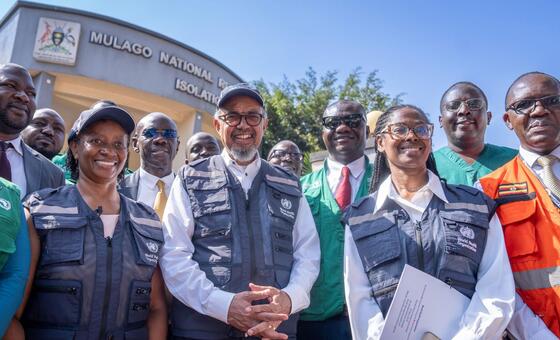
WHO representatives have expressed confidence in Uganda’s ability to maintain control over the outbreak, citing key progress in diagnostics and case management. The establishment of a dedicated Ebola Treatment Unit (ETU) at Mulago Hospital within six hours of the outbreak’s declaration exemplifies the country’s swift response. Staffed by Uganda’s Emergency Medical Team (EMT), a 146-member group trained with support from WHO and the European Union, the facility plays a pivotal role in isolating and treating patients. These measures have not only enhanced Uganda’s capacity to handle the crisis but also served as a model for neighboring countries.
Regional Coordination and the Role of Cross-Border Partnerships
WHO Director-General Tedros Adhanom Ghebreyesus recently conducted a regional assessment mission to evaluate Uganda’s efforts and strengthen cooperation with the DRC. During the visit, he emphasized that the outbreak’s success in being contained hinges on the partnership between countries. “Regional coordination is essential to ensure that no single nation bears the burden alone,” Tedros stated, underscoring the importance of shared resources and information. The joint initiatives between Uganda and the DRC have included synchronized surveillance, cross-border testing, and joint community outreach programs, which are critical in preventing the virus from spreading further.
Community involvement has been a cornerstone of Uganda’s strategy, particularly in border regions where populations are shared. Local health workers, volunteers, and awareness campaigns have played a vital role in educating residents about transmission risks and mitigation practices. WHO’s representative in Uganda, Dr. Kasonde Mwinga, noted that “preparedness saves lives,” a sentiment echoed by officials who credit Uganda’s emergency response teams for their agility in managing the outbreak. These efforts have not only protected the population but also demonstrated the power of grassroots initiatives in public health crises.
Global Implications and Lessons Learned
Uganda’s experience with the ninth Ebola outbreak has provided valuable insights for the global health community. The country’s ability to implement effective containment measures quickly has been attributed to its strengthened surveillance systems and expanded laboratory networks. These improvements have allowed for rapid case detection and timely intervention, reducing the outbreak’s potential impact. The WHO has commended Uganda’s response as a critical example of how preparedness and regional collaboration can lead to successful outcomes in the face of emerging health threats.
As the outbreak continues, WHO has called for sustained vigilance, noting that the virus remains a persistent risk. While Uganda’s current efforts are commendable, the organization warns that complacency could lead to new waves of infections. Tedros also advocated for a reevaluation of travel restrictions, arguing that they are less effective in curbing transmission than targeted public health measures. The WHO’s recognition of Uganda’s response serves as both an acknowledgment of its achievements and a reminder of the ongoing challenges in the fight against the virus.