
Kyrgyzstan wins seat on UN Security Council for first time ever
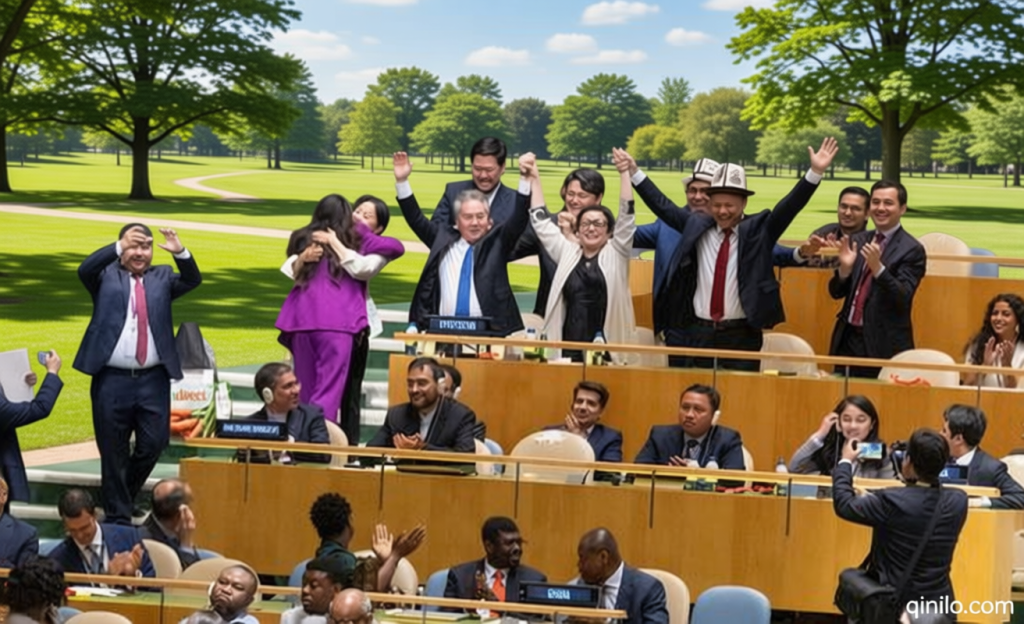
Kyrgyzstan Secures Historic UN Security Council Seat
Qinilo.com – Kyrgyzstan wins seat on UN Security Council — a landmark achievement for the Central Asian nation — as it joins the prestigious group of 15 members that shape global security decisions. This election marks the first time Kyrgyzstan has been granted a permanent voice in the Council, a body historically dominated by major powers. The victory underscores Kyrgyzstan’s growing diplomatic influence and its strategic push to enhance regional representation in international affairs. The decision came after a contentious race within the Asia-Pacific Group, where Kyrgyzstan narrowly outperformed the Philippines in a closely contested vote. With this new position, Kyrgyzstan will now participate in high-stakes discussions that determine everything from peacekeeping missions to sanctions, positioning itself as a key player in shaping the Council’s agenda.
Electoral Process and Regional Significance
The UN Security Council election, held by the General Assembly, resulted in the selection of five non-permanent members for two-year terms starting January 1, 2027. Kyrgyzstan’s win was a defining moment for the Asia-Pacific Group, which includes nations from East Asia, Southeast Asia, and the Pacific Islands. The Council’s composition now features an expanded diversity, with the addition of Kyrgyzstan and the removal of Denmark, Greece, Pakistan, Panama, and Somalia. This shift highlights the increasing importance of smaller, developing states in global governance, particularly those advocating for equitable representation and reform. Kyrgyzstan’s inclusion also signals its commitment to advancing regional interests on the international stage.
Throughout the voting process, Kyrgyzstan demonstrated a strong diplomatic campaign, leveraging its position as a strategic transit hub between Europe and Asia. Its support from other Central Asian countries and its focus on multilateral cooperation played a crucial role in securing the seat. The Philippines, a previous Council member, faced challenges in maintaining momentum due to internal divisions and competition from other candidates. Kyrgyzstan’s success not only solidifies its place in the Council but also sets the stage for potential reforms, as it now has the platform to advocate for changes that align with its vision for global peace and stability.
Geopolitical Dynamics and Voting Results
The election outcomes reflected both established alliances and shifting power dynamics. Austria and Portugal secured their seats in the Western European and Other States (WEOG) Group, with Portugal achieving 134 votes and Austria receiving 131. These results maintained the region’s traditional influence, while Trinidad and Tobago and Zimbabwe claimed representation from the Latin American and Caribbean Group and the African Group, respectively. The competition for the Asia-Pacific Group was particularly intense, with Kyrgyzstan and the Philippines vying for the final spot. After four rounds of voting, Kyrgyzstan emerged victorious, receiving 142 votes to the Philippines’ 49. This margin of victory highlights the Council’s evolving nature, as emerging nations gain traction against established ones.
Kyrgyzstan’s campaign was bolstered by its advocacy for conflict resolution and its alignment with key global issues. The nation’s emphasis on peacekeeping, sustainable development, and regional security resonated with a broad coalition of member states, particularly those in the Global South. Meanwhile, the Philippines’ loss sparked discussions about the need for greater regional support and the importance of aligning with international priorities. The outcome also emphasizes the role of voter sentiment in shaping the Council’s composition, as nations with strong public backing and strategic alliances often gain an edge in the voting process.
Implications for Global Governance
Kyrgyzstan’s seat on the Security Council represents a significant milestone in its diplomatic journey. As a non-permanent member, the country will contribute to shaping resolutions on issues such as climate change, counterterrorism, and humanitarian crises. The Council’s structure, which includes five permanent members with veto power and 10 non-permanent members, is now more reflective of the diverse interests of the world’s nations. Kyrgyzstan’s presence is expected to amplify the voices of Central Asia, a region often overlooked in global decision-making. The nation will work closely with its counterparts in the Asia-Pacific Group to address pressing challenges, including border disputes, economic integration, and energy security.
The election results also highlight the Council’s role as a microcosm of global politics. While major powers like the United States and China continue to dominate, the inclusion of nations like Kyrgyzstan signals a gradual shift toward a more inclusive system. This development comes as the Council faces growing scrutiny for its inability to adapt to modern geopolitical realities. Secretary-General António Guterres noted in a recent statement that international institutions remain anchored to the world as it was in 1945, with Kyrgyzstan’s win serving as a step toward reform. The new members will now engage in critical debates, aiming to balance the interests of powerful nations with those of emerging voices.
Challenges and Opportunities Ahead
Kyrgyzstan’s election is a testament to its diplomatic acumen, but the journey ahead will be equally demanding. The Security Council is known for its complexity, with decisions often requiring consensus among 15